
Exploring Effective Production Methods: Advanced Music Production Techniques

When diving into the world of music production, it’s easy to feel overwhelmed by the sheer number of tools, techniques, and creative choices available. But the truth is, mastering your craft is a journey that unfolds step by step. Whether you’re recording your first track or refining your sound, understanding some effective production methods can make a huge difference. Today, I want to share insights that will help you elevate your music with confidence and clarity.
Unlocking the Power of Effective Production Methods
One of the most important things I’ve learned is that effective production methods are not about complexity but about making smart choices that serve your music. For example, layering sounds thoughtfully can add depth without cluttering your mix. Instead of piling on every effect or instrument, focus on what complements your song’s mood and message.
Here are some practical tips to get started:
Use EQ to carve space: Imagine each instrument having its own room. Use equalization to reduce frequencies that clash and boost those that enhance clarity.
Apply compression wisely: Compression can glue your mix together, but overdoing it can squash the dynamics. Aim for subtle control that keeps your track lively.
Experiment with panning: Placing sounds across the stereo field creates a sense of space and movement. Try panning instruments slightly left or right to avoid a flat soundstage.
By focusing on these foundational techniques, you’ll notice your mixes becoming clearer and more engaging.

Caption: Eye-level view of a mixing console with knobs and sliders used for balancing sound.
Exploring Creative Sound Design and Effects
Once you’re comfortable with the basics, it’s exciting to explore creative sound design. This is where your personality as a producer shines. Using effects like reverb, delay, and modulation can transform ordinary sounds into something magical.
For instance, try these ideas:
Reverb for atmosphere: Adding reverb can place your instruments in a virtual space, from a small room to a vast cathedral. Adjust the decay time and wet/dry mix to suit the vibe.
Delay for rhythm: A timed delay can add rhythmic interest and depth. Sync it to your track’s tempo for tight grooves or use free delay for more experimental textures.
Modulation effects: Chorus, flanger, and phaser effects add movement and shimmer. Use them sparingly to avoid overwhelming your mix.
Don’t hesitate to automate these effects over time. Changing parameters during a song keeps listeners engaged and adds emotional dynamics.
What is the 80/20 Rule in Songwriting?
The 80/20 rule, also known as the Pareto Principle, is a helpful concept in songwriting and production. It suggests that roughly 80% of your results come from 20% of your efforts. In music, this means focusing on the key elements that make your song stand out rather than trying to perfect every tiny detail.
Here’s how to apply it:
Identify your song’s core: This could be a catchy melody, a strong hook, or a compelling rhythm. Spend most of your time polishing these parts.
Avoid overproduction: Adding too many layers or effects can dilute the impact. Keep your arrangement tight and purposeful.
Prioritize emotional connection: The feeling your song conveys matters more than technical perfection. Make sure your production supports the mood and message.
By embracing this rule, you’ll work smarter and create music that resonates deeply.
Using Technology to Enhance Your Workflow
Technology is a powerful ally in music production, but it’s important to use it as a tool, not a crutch. Digital Audio Workstations (DAWs), plugins, and virtual instruments offer endless possibilities, but staying organized and intentional is key.
Here are some workflow tips:
Set up templates: Create project templates with your favorite tracks, effects, and routing already in place. This saves time and keeps you focused.
Label and color-code tracks: Clear labeling helps you navigate your session quickly, especially when working on complex arrangements.
Use keyboard shortcuts: Learning shortcuts speeds up editing and mixing, letting you stay in the creative zone.
Take breaks: Your ears can get fatigued. Step away regularly to maintain perspective and make better decisions.
Remember, technology should serve your creativity, not overwhelm it.
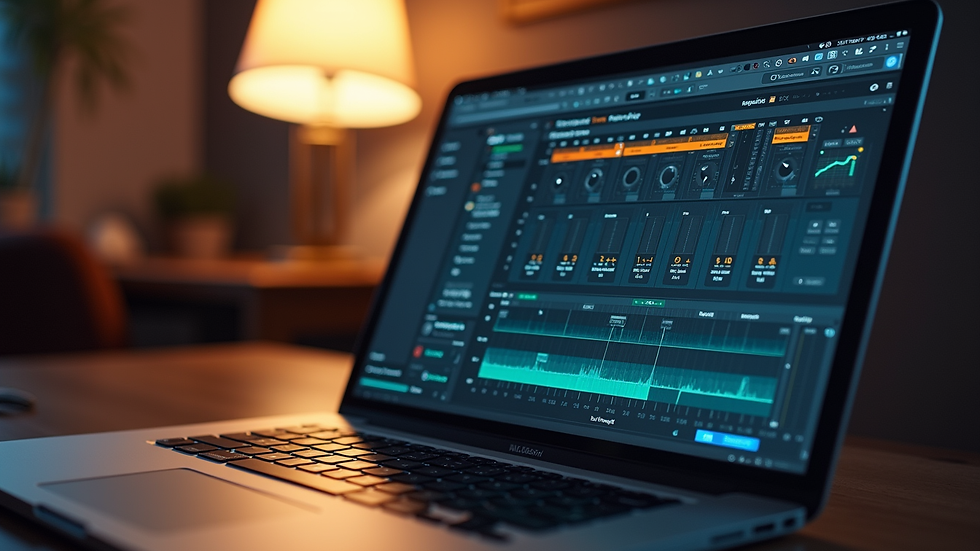
Caption: High angle view of a laptop screen with a digital audio workstation interface open.
Bringing It All Together: Your Unique Sound
At the heart of all these techniques is your unique voice as an artist. The goal is not to copy others but to find what works best for your music. Experiment, listen critically, and trust your instincts.
Here are some final thoughts to keep in mind:
Keep learning: Music production is an evolving craft. Stay curious and open to new ideas.
Collaborate: Working with other musicians and producers can inspire fresh perspectives.
Practice regularly: The more you produce, the more natural these techniques will feel.
Celebrate progress: Every step forward is a win, no matter how small.
If you want to dive deeper into advanced music production techniques, there are many resources and communities ready to support you.
By embracing these effective production methods, you’re not just making music—you’re crafting experiences that connect and inspire. Keep creating, and enjoy every moment of the journey.


Comments